
Gluten Free
What does following a gluten-free diet mean? That you're embarking on an easy diet with a wide range of health-promoting effects. Instead of dwelling on what you’re giving up, consider that you’re going to enjoy a whole new world of delicious food options to meet your special dietary needs. You’ll be eating seasonally, choosing more fresh fruits and vegetables, focusing on meats, seafood, poultry, legumes, lentils, corn, and rice, and discovering fascinating ancient grains such as quinoa, amaranth, and millet. You’ll be able to eat potatoes, eggs, most cheeses, even chocolate (!)—and enjoy them without guilt because you’ll be taking good care of your body. In fact, you’ll probably end up eating—and feeling—better than ever!
Visit this page for more information about living Gluten Free
---
We carry a large variety of gluten free items, the brands listed below represent just some of the offerings we carry









More Diets
Related Topics
- By Maureen Williams, ND
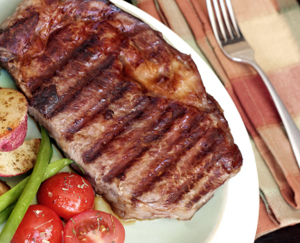
Cook Meat Right for Good Health
It’s long been known that people who get plenty of vegetables, fruits, fiber, fish, calcium, and vitamin D have a lower risk of colon cancer than people who don’t. According to a recent study, it appears that meat-eaters who place orders for medium-rare meats further reduce their risk.
Cook meat medium-rare or medium and try replacing red meat with fish or white meats
Choices that matter for colon health
Colon cancer generally forms from precancerous growths called polyps. Frequently eating fried or darkly browned meat more than doubled the colon cancer risk in a previous study, apparently because cancer-causing chemicals form during high-temperature cooking.
The new study asked people between 40 and 75 years old who were scheduled for routine colonoscopies to answer questions about their meat-eating and meat-cooking habits. Compared to the people who ate the least amount of total meat and red meat, the people who ate the highest amount were 50 to 60% more likely to have hyperplastic polyps, which are frequently benign but can develop into cancer. Eating the most well-done meat and well-done red meat increased the risk of large precancerous polyps by 40 to 60%.
Eat for cancer protection
To decrease your risk of colon cancer, try these healthy eating tips:
Eat more fruits and veggies—Tomatoes and cruciferous vegetables such as broccoli, cabbage, Brussels sprouts, and kale are loaded with cancer-fighting antioxidants and other compounds.
Focus on fiber—Whole grains, legumes, nuts, and seeds may help prevent cancer by binding helping to eliminate toxins in the digestive track.
Be picky about meat—Cook meat medium-rare or medium and try replacing red meat with fish or white meats.
“There is a lot of evidence already that eating meat increases the risk not only for colon cancer but for other cancers as well,” commented Dr. Julianne Forbes, a naturopathic doctor who practices in Maine. “Polyps are a warning sign that the lining of the colon is not healthy. The information from this study might provide more incentive for people with polyps, or even a high risk of polyps because of family history, to change their eating habits from an animal-based diet to a predominantly plant-based diet.”
(Int J Cancer 2007;121:136–42)
Live Better We Can Help

Useful Links
Connect With Clark's
| Proud Member of | |||||
 |
 |
 |
|||
 |
 |
 |
|||
2026 © All Rights Reserved. Clark's Nutrition is a registered trademark of Clarks Nutritional Centers, Inc.
Terms of Use